
When He Is the One Being Abused: Male Victims of Domestic Violence in Nigeria
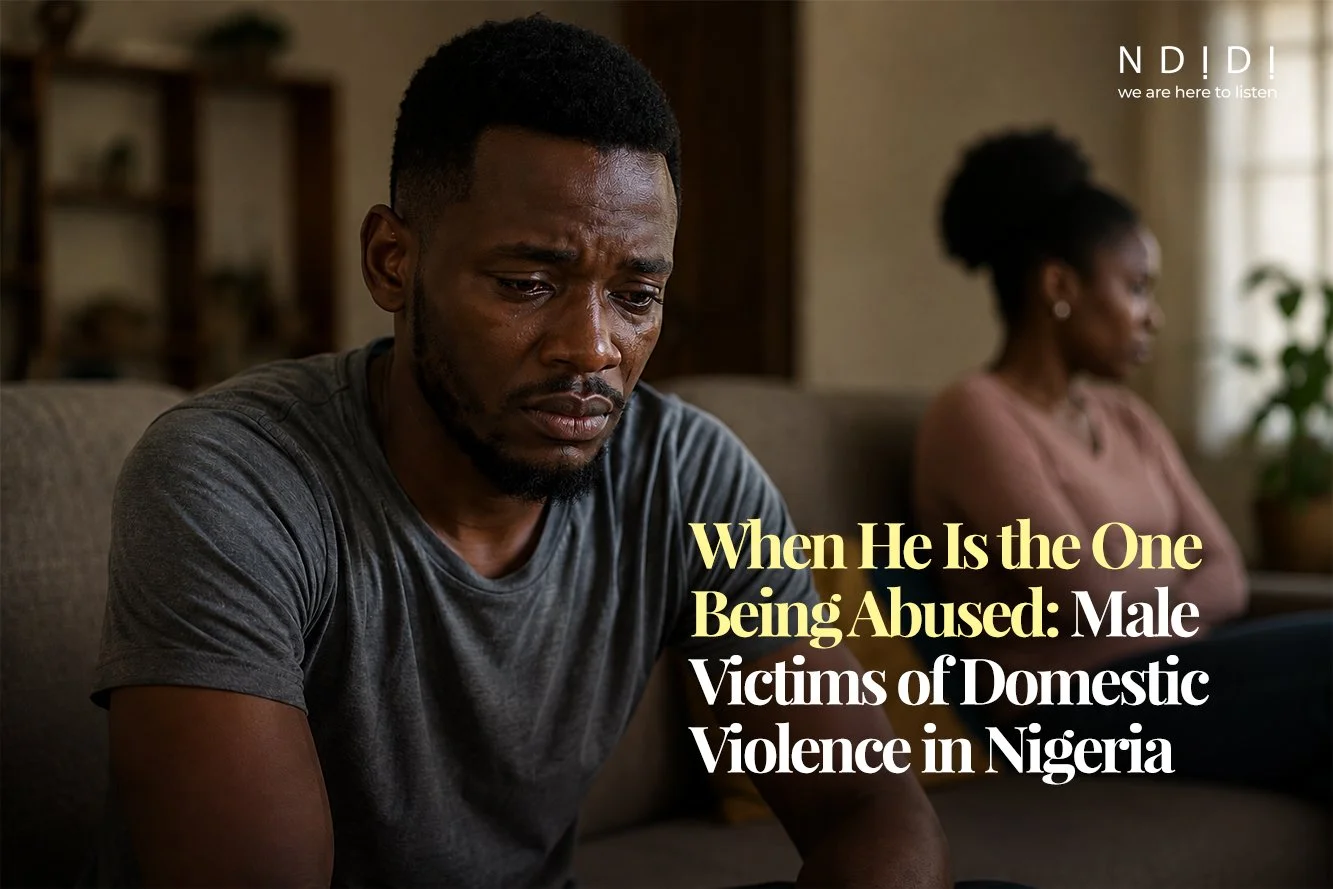
In 2023, the Lagos State Domestic and Sexual Violence Agency reported something that quietly broke a long-standing assumption: between September 2022 and July 2023, 340 men in Lagos formally reported being victims of domestic violence perpetrated by their wives, more than double the number recorded the previous year. The agency's Executive Secretary, Titilola Vivour-Adeniyi, noted that this signalled the culture of silence among men around abuse was gradually starting to break.
That number is not because domestic violence against men suddenly increased.
It is because, for the first time in many of these men's lives, someone gave them a place to say it out loud.
The Story We Have Not Made Room For
When we talk about domestic violence in Nigeria, the image is almost always the same. A woman, a bruise, a man who raised his hand. That image is real and deserves every bit of the attention it has received.
But there is another image we rarely talk about. A man, controlled. A man, humiliated. A man, hit, manipulated, or emotionally worn down by a partner, with almost nowhere to take that story.
Because culturally, we have not built the language for it.
The Silence Before the Silence
Before a man even gets to the point of naming what is happening to him, he runs into a question that stops most men cold. Who is going to believe me?
Nigerian masculinity has been shaped around control, strength, and dominance. A man saying "she abuses me" sounds, to many ears, like a contradiction, as if the role he was raised to play makes the experience impossible, even while it is happening to him in real time.
So instead of concern, disclosure is often met with mockery.
"How can a man now be the one crying?" "Na you go let her beat you." "As a man, you cannot even control your woman?"
That response does something quietly devastating. It does not just silence him in the moment. It teaches him, permanently, that this is not a story he is allowed to tell.
What It Actually Looks Like
Abuse against men in Nigeria rarely matches the image we have been trained to picture. It is layered, repeated, and often disguised as something else entirely.
A 2024 study examining domestic violence against men in Southwest Nigeria found that out of 380 men surveyed, 28.4 percent had experienced some form of domestic violence from a partner, with psychological abuse reported as the most common form. Financial abuse, intimidation, and threats also featured prominently in the men's experiences.
Physical abuse still happens, even though it is barely discussed. Because of his size or strength, a man is frequently expected to simply absorb it, or accept that he could never retaliate the same way.
Psychological abuse is the most commonly reported form, and arguably the most corrosive. Constant humiliation, intimidation, and threats wear down a man's sense of self over time, even without a single visible mark.
Financial abuse shows up as control. Being denied access to his own resources, or trapped in a cycle where leaving feels economically impossible.
Coercive control is one of the most underrecognised patterns. A partner monitoring his every move, isolating him from friends and family, slowly shrinking his world until she is the only person left in it.
None of this requires a bruise to be real.
Why the Silence Holds
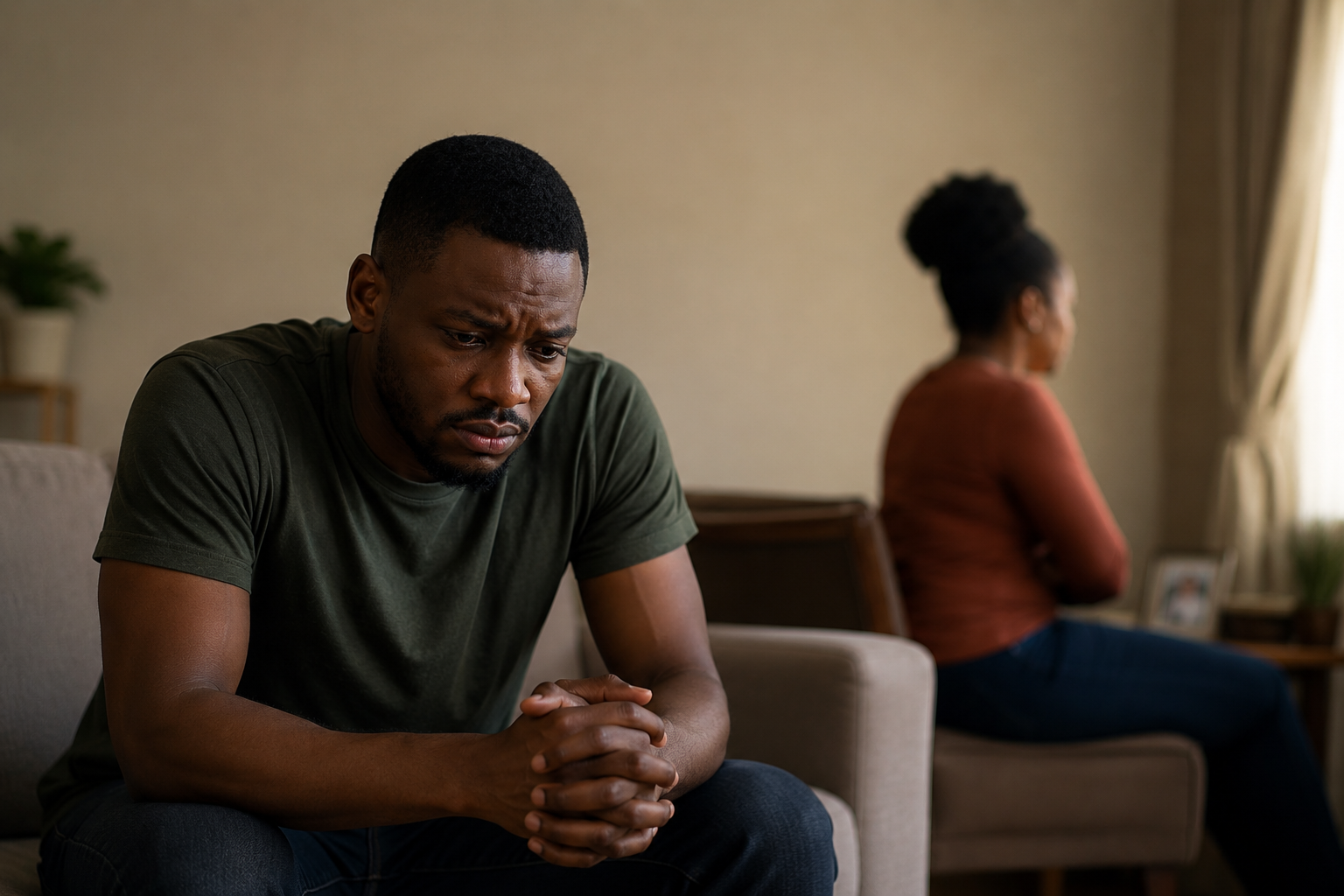
There are layers here, and each one reinforces the next.
Masculinity as a script: Boys are raised to be the protector, the provider, the strong one. The role was never written with room for him to be the one in danger.
Fear of ridicule: Where a woman disclosing abuse is increasingly met with sympathy, a man disclosing the same often becomes a punchline among the very people he hoped would help him.
Systemic gaps: Most domestic violence support structures in Nigeria, including shelters and helplines, were built with women as the assumed default victim. A man trying to report abuse frequently does not know where to go.
Shame around vulnerability: Admitting abuse means admitting powerlessness, and Nigerian men have rarely been given permission to feel powerless, let alone speak about it.
So the abuse continues quietly, sometimes for years.
What Goes Unnamed, Goes Inward
Living inside an abusive relationship with nowhere to take that pain does not make the pain disappear. It changes shape.
It often becomes chronic anxiety, a man permanently on edge even outside the relationship. It develops into depression that gets dismissed as "stress," because no one asks where that stress is actually coming from. It shows up as emotional withdrawal, a man who goes distant and irritable while everyone assumes he is "going through something" without anyone asking what.
This is not a weakness. This is what happens to any human being, regardless of gender, who exists too long inside an environment where their pain has nowhere to go.
Making Room
What is missing is room? Room for a man to say "this is happening to me" without his masculinity being put on trial in the same breath. Room for friends and family to ask a quieter man "are you okay?" with the same weight they would give a woman who has gone unusually silent.
If something in this feels familiar, you do not have to carry it in silence. What you are experiencing is real, regardless of how unfamiliar the story sounds to the people closest to you.
And if you know a man who might be going through this, your willingness to ask, and to actually sit with whatever answer comes back, might be the first room he has ever been given to say it out loud.