
When You Are the Emotional Backbone of the Family
A Women’s Month Reflection
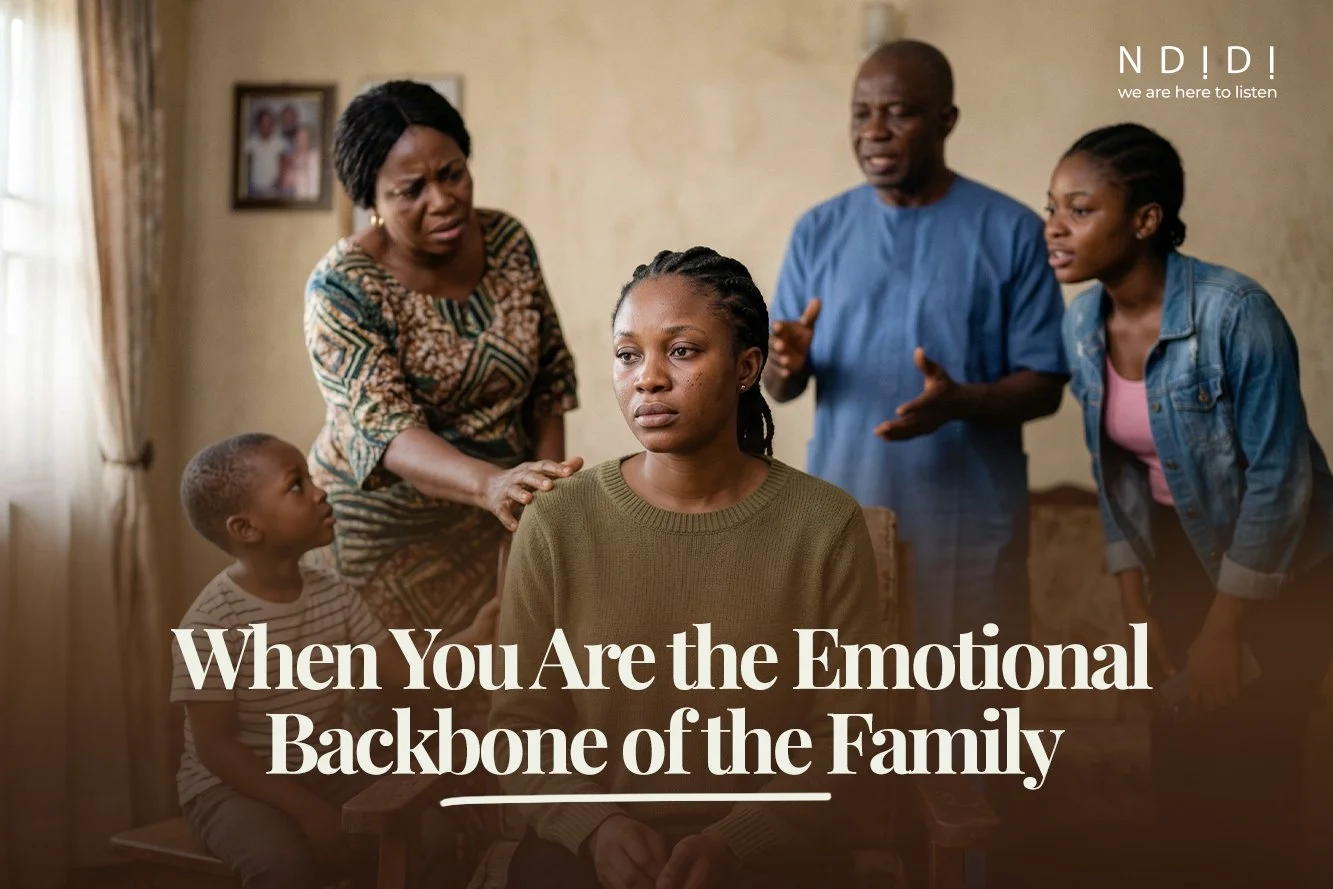
It usually starts quietly. You are the one they call first.
Not because you have all the answers, but because you listen.
You notice when your mother’s voice sounds different on the phone.
You sense when your sibling says “I’m fine” but means something else entirely.
You step in before arguments escalate, soften words that could wound, and carry tensions that were never yours to hold.
No one formally gives you this role. You simply grow into it. And before you realise it, you have become the emotional backbone of your family.
The Woman Who Holds Everything Together
There is always a woman like this in the family.
The strong one.
The dependable one.
The one who keeps things from falling apart.
People admire her. They rely on her. They trust her with things they cannot say out loud.
But what they don’t always see is this:
She is often the one crying in private.
The one laying awake at night, replaying conversations.
The one carrying worries that do not belong to her.
She has learned to be steady for everyone else, but she has never quite learned how to fall apart safely.
How It Becomes Your Identity
In many Nigerian homes, strength is not just encouraged in women; it is expected.
You are taught, gently but firmly, that:
A good woman keeps the peace
A strong woman does not complain
A responsible daughter holds the family together
So you adjust.
You swallow your feelings when they feel inconvenient.
You make space for everyone else’s emotions.
You become the mediator, the fixer, the comforter.
And over time, you stop asking yourself a very important question: Who holds me?
The Weight No One Talks About
At first, it feels like love.
Being there for your family.
Being the one people trust.
Being needed.
But slowly, the weight begins to settle.
You start to feel tired in ways that sleep cannot fix. Conversations leave you drained, even when you’ve said all the right things. You hesitate to share your own struggles because you don’t want to “add to the burden”.
So you carry it quietly.
The expectations.
The emotions.
The responsibility of being “the strong one”.
Until one day, you realise that strength has started to feel like silence.
The Fear of Letting Go
There is a reason you keep holding on.
A quiet, persistent fear:
If I stop, everything will fall apart.
So you keep showing up.
You keep absorbing.
You keep being what everyone needs.
Even when you are running on empty. But the truth is, you were never meant to carry an entire family’s emotional world on your own. And the longer you do, the further you drift from yourself.

A Different Kind of Strength
What if strength looked different?
What if it wasn’t about holding everything together, but about knowing when to put something down?
What if strength meant:
Saying “I can’t do this right now” without guilt
Admitting “I’m not okay” without fear
Allowing yourself to be supported, not just relied on
What if strength included you?
Because you are not just the one who listens. You are someone who deserves to be heard. You are not just the one who comforts. You are someone who deserves comfort.
Learning to Return to Yourself
Letting go does not mean abandoning your family. It means returning to yourself. It looks like small, quiet decisions:
Take a moment before answering that call.
Saying “I need space” and meaning it.
Choosing rest, even when there is more to do.
It might mean reaching out for support beyond the family system, through trusted friends, community, or organizations like the NDIDI Support Circle where emotional support is shared, not carried alone. It means recognising that you are human, not an endless source of strength.
This Women’s Month
This Women’s Month, we celebrate women who hold everything together.
But we also make space for a softer truth:
Even the strongest woman needs somewhere to rest.
Even the one everyone depends on deserves to exhale.
Even you… deserve to be cared for.
Conclusion
If you have been the emotional backbone of your family for as long as you can remember, this is for you:
You are allowed to pause.
You are allowed to feel.
You are allowed to need it.
You do not have to earn rest by breaking first.
And you do not have to carry everything to be worthy of love.
Sometimes, the bravest thing a woman can do is to finally put the weight down.